

Endemic, invasive, native...
What does it all mean and when does it matter to a land steward...

First I want to thank you for responding to my recent survey I sent out a few weeks ago. Your feedback is super helpful. I love hearing from you, so no need to wait for a survey. Email or comment anytime to share your thoughts.
I recently received a newsletter listing all the important invasive species to keep an eye out for and manage this time of year in Virginia. And it reminded me why there is so much confusion and overwhelm around invasive species management. Because the average landowner is presented with lists and lists of invasives “to watch out for!” or “eradicate immediately”. Emergency!
For example, here’s the invasive plants list for Virginia….
There are easily around 100 species listed. This includes everything from highly invasive tree-of-heaven and Johnsongrass to less invasive common chickweed and ivy-leaved speedwell. As someone making management decisions for nearly 700 acres, let me tell you chickweed and speedwell rarely if ever cross my mind. It’s all about scale…. but more on why later.
The question that keeps coming up when I teach workshops and speak to other landowners, and even in the poll I sent here in substack is this…
How do I prioritize invasives, when does it matter? It’s impossible to get rid of them all, so what’s most important?
You see, here’s the thing. We don’t need more lists, we need more strategy.
And that’s what I want to help with. But first I think it will help to share some definitions to help us think about the spectrum from rare natives to highly invasive and everything in between...
Native
Native plants are generally defined as species that occur naturally in a specific region and genetically adapted to local growing conditions. But there is some nuance to this and I discuss it more in another newsletter post:

Some plants are more locally native than others and some more rare than others which impacts conservation prioritization on a given property. Here is a helpful list of conservation status definitions in terms of local/state rarity and global rarity. For any given plant you can find its status for your state. A plant can be locally rare but globally secure or can be globally rare but locally common. A plant can also be “endemic” meaning it exists naturally only in one specific region. For example, many spring ephemerals in Eastern North America are endemic to that region only.
A plant’s conservation status and endemism is important information to determine when surveying plants on your landscape and when prioritizing conservation priorities and invasive species removal.
Non-native or exotic
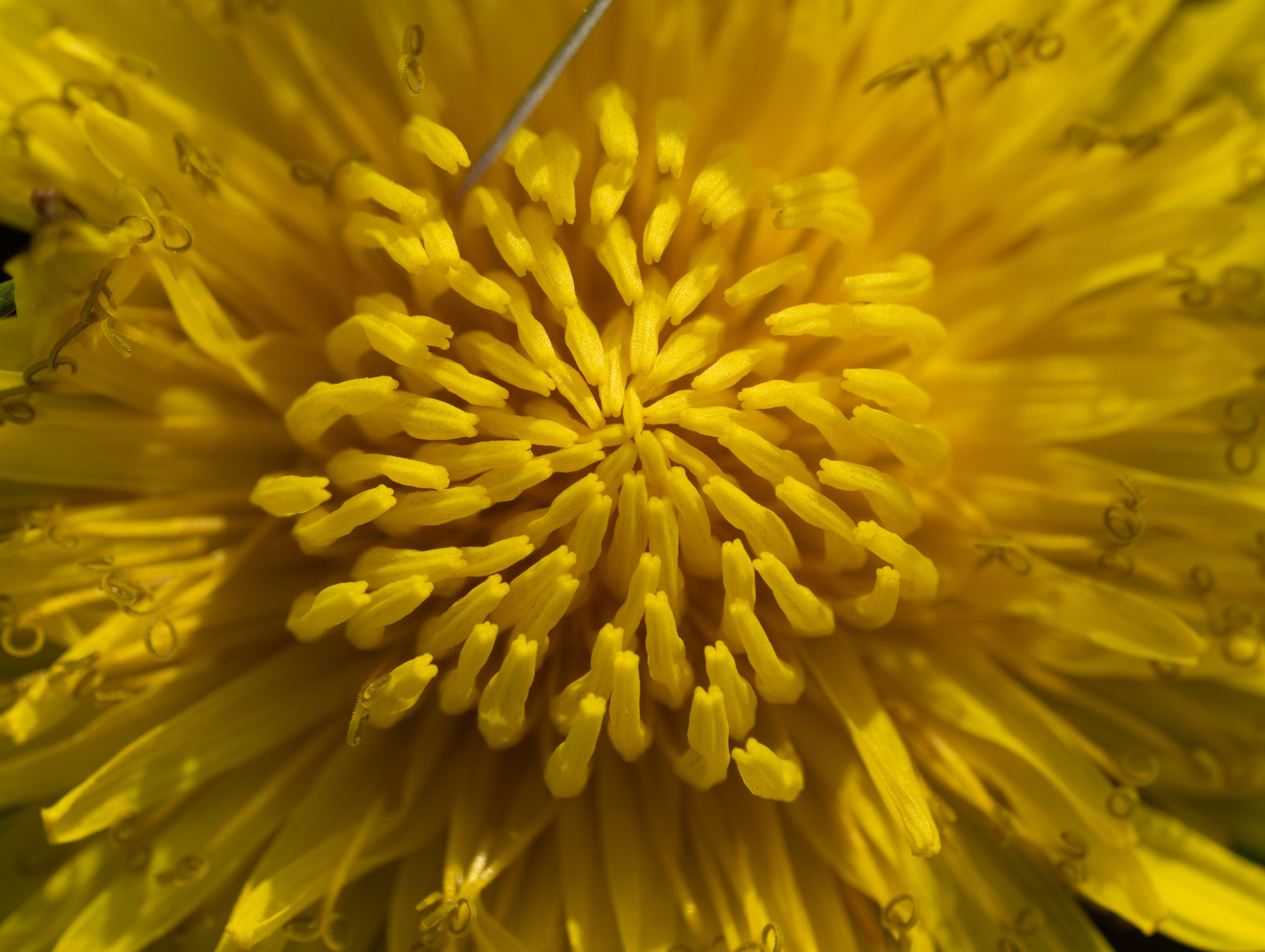
It’s important to separate non-native or exotic species that have become “naturalized” or are non-invasive from invasive species. Not all exotic plants are invasive. Naturalized plants are non-native but have long established self-sustaining populations in a region that don’t necessarily dominate the ecosystem the way highly invasive plants do. Think of dandelions or plantain. They are non-native in North America but have become naturalized.
Non-native invasive
When it comes to invasive species there is certainly a hierarchy of ones that are highly invasive to ones that are less common or less disruptive to an ecosystem.
Novel or watch list species: There are new invasive species that may pop up at any given time and most states will have them on a watch list to keep an eye out for.
When it comes to prioritizing invasive removal, the degree to which it can disrupt a native ecosystem is important. From lowest to highest priority of course follows this order….low invasiveness → medium invasiveness → high invasiveness! Most state lists will indicate the level of invasiveness.
So there’s a clear spectrum of nativity and what that means for conservation vs. removal prioritization. Now let’s narrow in on invasives. You can look up the complete list of invasive species in every state (a quick search engine inquiry will get you there).
But now that you have a list…. it can be overwhelming.
So here is how I prioritize…
First, read my earlier newsletter as this one builds upon the fundamentals I discuss there. It’s the best starting point on this topic when you are trying to figure out how to prioritize invasive management for your land. It focuses on the “WHEN” and “WHERE” to remove invasives first.

And now let’s take it a step further and talk about the “WHAT.” You understand your property, you have gotten to know the areas of conservation priority and the native species you want to protect and promote. But now you are still looking at the long list of invasives and wondering, between this invasive and that invasive, where should I prioritize removal?
Get to know the behavior, invasiveness rank and seasonality of the plants.
Get to know the plants you are looking at and determine their nativity status and where they fall on the spectrum of native to invasive. Just because something is nonnative does not mean it is a problem. Leave the dandelions please! :) Highly invasive is top priority for removal.
But say you have several highly invasive plants. Now which do you prioritize? Look at these features to narrow it down…
Seasonality. Management of some species is more effective at certain times of year. Focusing on only the plants that are easiest to control in a given season narrows your list considerably. For example, woody species, if you are doing cut stump treatment, are most effectively removed in fall when sap is running back down to roots.
Novel/new invasives take priority. If it’s a new invasive that just showed up on your land — that is a critical window of opportunity to remove it before it takes hold.
Are they currently displacing or encroaching on natives? Get back to location as discussed in my previous newsletter. The ones that are encroaching on important natives and less disturbed areas are top priority for removal.
It is an annual, biennial, perennial? That factor can make a huge difference. Is it about to go to seed? If so, prevention of that makes timing critical. For example, knowing a plant is biennial (like many of the invasive thistles) changes my approach to management and my focus turns to preventing flowering and seeding in year two.
Scale/your time matters. What someone wants to tackle on their 1 acre parcel may be very different than what concerns me on the 100s of acres scale. So property size plays a role in prioritization as does the quantity of each invasive. For example, perhaps I have a massive sea of Japanese stiltgrass and a handful of Japanese barberry in a little patch of forest on my property. I may not have capacity right now to mow or deal with the overwhelming amount of stiltgrass yet, but I do have time to remove the 10 barberry shrubs. Both are highly invasive but my capacity can help determine which I tackle first for an immediate win.
Lastly, accept that you will never eradicate all invasives. So prioritizing is key and it’s all about shifting the focus to what you are managing for. What removing invasives will help you support.
And now, speaking of seasonality, here are a couple species that I recommend prioritizing this time of year.


Callery (aka Bradford) pear (Pyrus calleryana). You know all those lovely white trees flowering along the roads this time of year? Chances are they are the invasive pear. While it’s often recommended to deal with invasive woody plants in fall or winter, the Bradford pears are flowering right now and are so easy to spot. Makes finding them and managing them a whole lot easier. And guess what! If you live in VA, DOF offers landowners native trees in exchange for invasive pear removal. Check it out! An exchange event is coming right up on April 11. https://dof.virginia.gov/forest-management-health/forest-health/financial-assistance-program/callery-pear-exchange-program/
Lesser celandine (Ficaria verna). If you manage any sort of floodplain or riparian area especially, this is the time of year to spot this plant and remove it….ASAP. This would be a high priority species especially if it just showed up on your property. I’ve seen it completely overtake floodplains. To remove it, I prefer to dig up the whole plant (and all its root bulbils) and plant a native plant in the disturbed ground.
Want to know how to distinguish lesser celandine from some of its common look-alikes? A new episode of my look-alike library video series is live to show you how to do just that…
That’s all for today’s newsletter!
Reply to this email to introduce yourself and let me know what topics you would like me to cover in future newsletters.
Botanically yours,
Charlotte