

Beyond "No Mow May"
Catchy as it sounds, "No Mow May" isn't a strategy I employ myself or generally recommend...as an end goal. But I don't dislike it either. Let's explore some nuance that 3 short words don't capture.

I was recently a guest on the wonderful Native Plants Healthy Planet Podcast. Fran and Tom are the most delightful hosts and I highly recommend subscribing to hear all their episodes!
They asked me what I thought about “No Mow May” and at first I was a little caught off guard because to be honest I simply don’t think about “no mow may” all that much. At the stage of land conservation and stewardship I am in, it’s not that useful.
But as a new homeowner, who I think this trend is trying to reach, I think it could be a nice start — a way to dip your toes in to thinking more about our yards as ecosystems, not green deserts.
And as I reflected more on the questions after the interview, turns out I have many thoughts about it and that’s what I want to dive into today.
Here’s the thing. I think although well intentioned, “no mow may” ultimately missed the mark. No mow is a good first step in a strategy, but it’s not the end goal per se.
There’s nuance and a whole lot of caveats but nuance and detail don’t go viral. Catchy alliteration and one-step answers do. So here’s my deep dive for those that want to look past the veneer of catchy social media trends.
The main reason there’s now pushback around no-mow-may is because people see that there’s much more to be done. So if we look at it instead as an exploratory step in the process of reconnecting to our yards, a process of discovery, and the start of a journey to enhance and plant more native species then that’s a great start.
So first, what do I like about no mow may?
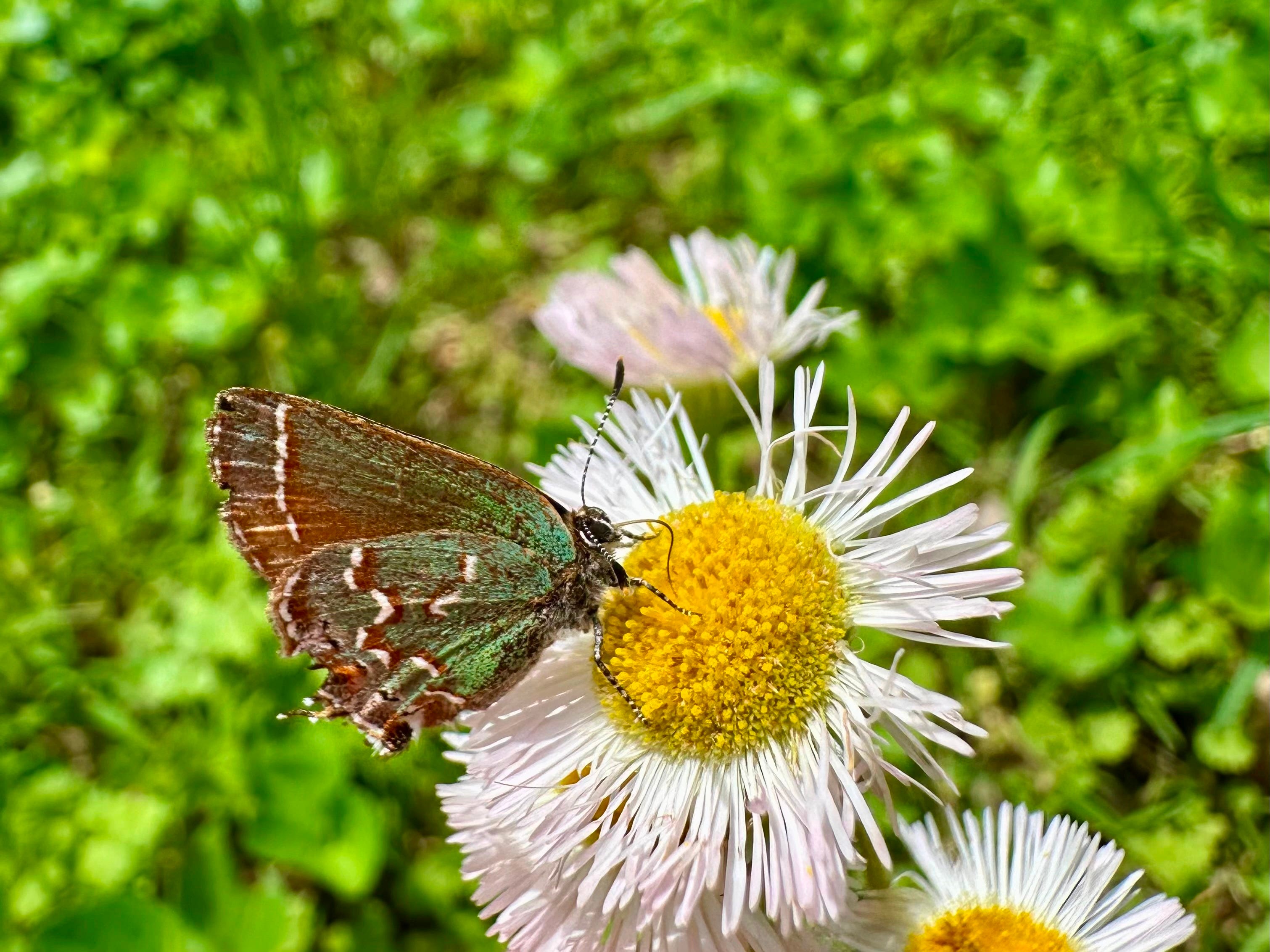
You learn what you have. How else would my friend have found native wild ramps growing in a back edge of her lawn? True story (and I have many more like it!)
It’s a good start. On the spectrum of supporting wildlife and the environment: is unmowed lawn better than mowed lawn? I vote yes. Are lawns with flowering white clover and dandelion better than a mown pollen desert? Yes. Does taller grass help more to hold water and support our struggling groundwater. Yes. Are there even better options? Of course but let’s celebrate first steps and small wins too.
It sparked more conversation about the downsides of lawns. Brought the idea to more people. Encouraged thought around moving beyond a manicured green dessert when it comes to supporting ecology.
May is insane! Like seriously spring planting season and going for walks to look for spring ephemerals keeps a girl busy…so a break from mowing. Why not? 😅
So for those who like no mow may and have found it a motivating and accessible and manageable way to do something supportive for the small space of Earth that you tend, thank you! Keep it up. The critters will thank you. Seriously, I mean this with all my heart. In the endless lists of little things we “ought to be doing” from turning down straws at restaurants to remembering our re-useable grocery bags… to boycotting harmful corporations and companies…to driving an EV to… to to to … ad infinitum. There’s so much to keep up with it’s overwhelming. So pick and choose what works for us! And even if we can’t do it all, let’s celebrate what we can do (while also voting and calling and holding politicians accountable to make change on a collective level…but I digress…)
I think it’s important to remind people that there’s a spectrum and that land conservation work is incremental. Little bits DO make a difference and we should celebrate good intention and all the small wins.
For those looking to do more…
Beyond no mow.
Maybe you are someone who likes the idea of “no mow.” You really want to do something to support biodiversity in your yard and this was a good way to dip toes in. Because with a blank canvas it’s so hard to know where else to start.
But then you tried it and got overwhelmed.
Your neighbors got mad, the aesthetic was stressful and it led to tougher mowing come June. And you wonder what it was all for.
Here, my friends, is a process I propose instead:
Stop mowing for a month. May can be a great time but could also be later in the summer when it’s hotter and drier. This is where no mow may can fit in. But I would recommend doing it several times in different seasons like in spring but also late summer or early fall to learn what plants are around in different seasons and support species at diff times.
Look closely! This is the most important step. Discovery! Engage with the space and learn the plants (iNaturalist app can help) and see what critters are visiting.
Transition to selective mowing. Note the areas with awesome plants and leave those alone to grow and thrive and flower and set seed. This adds intention to your mowing process. Mow the areas where you play and recreate. Or mow paths where you invite walks. And leave intentional islands or sections of great plants that are already there (and then you can even create more native plant areas in a later step). You can mow these areas eventually at the end of the season once the desirable plants have had a chance to set seed. Or better yet, leave them tall in winter to support wildlife in winter (birds love eating the seeds) and then reset in March or early spring. And if your yard is small, you can use a string trimmer to refine your selective mowing even more!
**Now some of you may say but there’s just nothing good in your yard. It’s all lawn grass and an occasional buttercup or other European weed**
That’s ok then you can move to step 4…
If you want to go further start enhancing areas with more native plants. This can mean small islands within the lawn that you mow around or picking a section of lawn perhaps closer to the house to convert to garden. (Cardboard smothering or sod cutting are great ways to start). See my photos below for one strategy I used in my own yard recently.
You can then use strategic mowing timing to support native species that may have different seasonality than the non-native species. I.e. mow earlier in the season to keep back non-native species that love cooler weather, then stop mowing later in the season to support the native wildflowers and grasses that you planted that thrive in hotter months.
If you have a wet section contact your local soil and water conservation district. Here in VA they have funds available to help homeowners convert wet areas of lawn to rain gardens. Guys, we are losing groundwater and need more native plants, not lawns!
Add more native plants over time. And yes I mean a long time. It’s a process and overwhelming to try to do it all at once so little by little is great way to keep momentum without burnout. Check out Homegrown National Park or your local native plant societies for some helpful resources.
Here’s what selective mowing looks like in my yard right now.


And here’s a section where I planted native wildflowers and native rose bushes directly into a sunny and drier (aka thinner grasses) area of the yard last fall. And spoiler alert, I will use mowing at strategic times to favor the wildflowers over the non-native grasses.


I’ll leave it there for today except to ask that if you have discovered wonderful native plants I your yard I’d love to hear about it! Leave a comment below. Seriously it happens more often than not and I love the thrill of that discovery even if vicarious.
And now, let’s start a new hashtag….. #selectivemowmay or #nomowtoselectivemowtoplantnativesmay . There, that’s the one. 🤪
If you found this helpful, you may enjoy some of my other recent posts on land stewardship:


And MORE!
That’s all for today’s newsletter!
Reply to this email to introduce yourself and let me know what topics you would like me to cover in future newsletters.
Botanically yours,
Charlotte